 Our History
 Our Providers
 About Us
 Blog
Blog
 Contact us
 Diagnostic & Preventive
 Dental Implants
 Clear Braces - Invisalign
 Cosmetic Dentistry
 Periodontics
 Patient Forms
 Payment Information
 Insurance Options
 CareCredit Dental
 Appointment Policy
 Free Consultation
 Complimentary Teeth Whitening
 Teeth Whitening
Teeth Replacement Options Manhattan: Implants, Bridges, and Dentures Compared
The best tooth replacement option depends on the number and location of missing teeth. A single missing tooth is usually replaced with either a dental implant or a traditional bridge. Multiple missing teeth in a row are often replaced with an implant-supported bridge or a traditional fixed bridge. Scattered missing teeth may require multiple individual implants or a removable partial denture. A full arch of missing teeth may be replaced with full mouth implants, a snap-in implant denture, or a traditional complete denture. Beyond gap size and location, the right replacement option for one or more teeth also depends on the health of your surrounding teeth and jawbone, your timeline, and your budget. There is no single correct answer for every patient. Use the decision guide below to find your starting point.
Top Rated NYC Dentist
2,200+ Reviews
Open 7 Days
What Are the Best Options to Replace Missing Teeth in NYC?
Teeth missing due to decay, gum disease, or injury create both dental problems and practical consequences for daily life. The right replacement option for one or more teeth depends the location of the gap, the health of your surrounding teeth and jawbone, your timeline, and your budget.
There is no single correct answer for every patient. 209 NYC Dental offers a range of treatment options to fit your needs. Use the decision guide below to find your starting point.
Tooth Replacement Alternatives
Three factors drive most decisions: budget, treatment timeline, and how many teeth need replacing. Start here, then explore the option that fits your situation.
Budget
Cost Considerations
- Most affordable: Flipper, Maryland bridge, removable dentures
- Moderate cost: Traditional bridges, partial dentures
- Higher investment: Implant-supported options
- Highest cost: Individual implants for each tooth
Note: Bridges and single implants cost similarly when replacing 1-3 teeth if neighbors need crowns.
Timeline
Treatment Speed
- Fastest (2-3 visits): Bridges, dentures, flippers
- Longer (3-6 months): Implants, implant-supported dentures
Many Manhattan professionals choose faster options for important events or to avoid extended treatment.
Number of Teeth
Best Options by Number of Missing Teeth & Location
- Single tooth replacement: Traditional bridge or single implant
- Multiple consecutive teeth: Traditional bridge or implant bridge
- Multiple scattered teeth: Partial denture (most cost-effective)
- Entire arch: Full dentures (affordable) or implant-supported (stability)
Ready to discuss your options? Schedule a dental implant consultation with our experienced team today.
NYC Teeth Replacement Options and Its Costs at a Glance
| Option | Surgical? | NYC Cost Range | Estimated Lifespan | Best For | Considerations |
|---|---|---|---|---|---|
| Dental implant with crown | Yes | $3,500-$6,500 per tooth | 20-30+ years (post); crown 5-15 years | Patients with adequate bone who want a permanent, standalone replacement. | Most stable & predictable outcomes. |
| Implant-supported bridge | Yes | $6,000-$12,000 (2-3 teeth) | 20-30+ years (post); bridge 5-15 years | Two or more consecutive missing teeth with healthy bone. | Most affected by poor oral hygiene. Requires increased attention to brushing, flossing between and under the bridge. |
| Traditional fixed bridge | No | $3,500-$6,500 (3-unit) | 10-15 years | Fixed result without surgery, especially when adjacent teeth already need crowns. | Most affected by poor oral hygiene. Requires increased attention to brushing, flossing between and under the bridge. |
| Removable partial denture | No | $1,500-$3,000 | 2-8 years based on the health of adjacent teeth | Budget-friendly replacement for scattered missing teeth. | Lifespan based on the health of adjacent teeth. |
| Complete denture | No | $1,500-$5,000 per arch | 5-7 years before reline | Missing all teeth in one arch. The lowest-cost full-arch option. | Lower dentures are not as stable as upper dentures. |
| Snap-in implant denture | Yes | $10,000-$15,000 per arch | 10+ years (post); denture 5+ years | More stability than conventional dentures without the cost of a full fixed bridge. | Requires yearly maintenance with a dentist. |
| All-on-X | Yes | $25,000-$35,000 per arch | Varies, based on oral hygiene, systemic health | Permanent, fixed full-arch restoration. | Requires professional cleanings with a dentist every 3 months. |
| Flipper tooth | No | $250-$600 | 3-12 months (temporary only) | Immediate gap coverage while healing or planning permanent treatment. | Provides little function. |
All cost in this table are NYC market estimates. Individual fees depend on case complexity, doctor’s expertise, materials, and any preparatory procedures. These figures do not include preparatory procedures such as tooth extraction, bone grafting or sinus lifts.
Why Replacing Missing Teeth Matters
What Happens to Your Jaw After You Lose a Tooth?
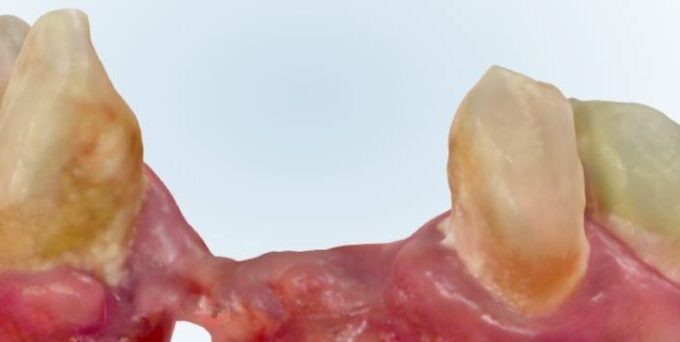
There is a biological reason dentists encourage prompt replacement, and it goes beyond aesthetics. The jawbone depends on stimulation from tooth roots to maintain its shape and density. When a tooth is lost, the bone that once supported the tooth root no longer receives normal chewing pressure. The body gradually resorbs that unused bone.
A systematic review measured horizontal bone width loss of 29% to 63% within six to seven months of extraction, with vertical bone height dropping 11% to 22% in the same window. Most loss occurs in the first 90 to 180 days.
Tan WL et al. – Clinical Oral Implants Research, 2012
What Happens to My Other Teeth If I Do Not Replace a Missing Tooth?
Failing to replace missing teeth creates cascading effect of dental problems:
- Neighboring teeth may tilt or shift
- Opposing teeth may over-erupt
- The bite may become uneven
- Chewing efficiency may decline
- Jawbone volume may shrink
- Future dental implant treatment may require bone grafting
Over time, untreated tooth loss can cause bite changes, uneven chewing pressure, jaw joint strain, gum problems, and additional tooth wear. The longer a patient waits, the more the bone foundation shrinks at the missing tooth site. Dental implants are the only replacement that stops this process.
Single Missing Tooth Replacement Options
A dental implant, a three-unit bridge, or a cantilever bridge can replace one missing tooth. Each option trades cost, durability, and impact on surrounding teeth differently.
| Feature | Dental Implant | Traditional 3-Unit Bridge | Cantilever Bridge |
|---|---|---|---|
| Best for | Most adults wanting a permanent, freestanding solution. | Patients whose neighboring teeth already need crowns. | Single tooth replacement where only one adjacent healthy tooth is available. Ideal for low-pressure front-tooth sites. |
| Affects neighboring teeth? | No | Yes. Permanent crown prep on both sides. | Yes. Permanent crown prep on one side. |
| Preserves jawbone? | Yes | No | No |
| Manhattan cost (all-in) | $3,500-$6,500 | $3,500-$6,500 total | $1,500-$3,000 |
| 10-year survival | 93-96% | Higher for end-abutment designs | ~82% |
| Treatment timeline | 3-6 months | 2-3 weeks | 2-3 weeks |
| Primary risk | Peri-implantitis | Decay or gum disease at abutment teeth | Decay or gum disease at the anchor tooth |

Dental Implant for One Missing Tooth
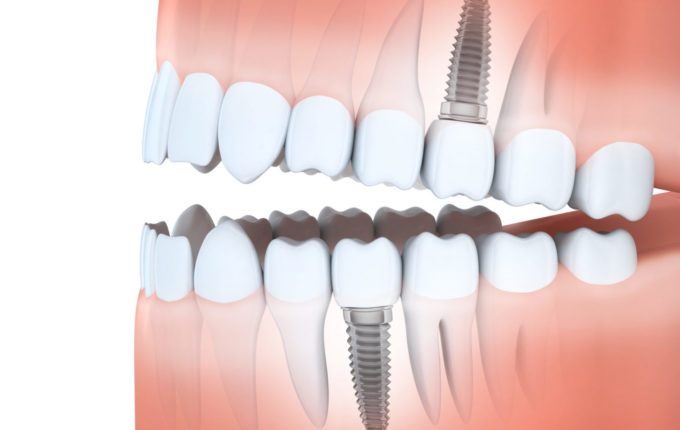
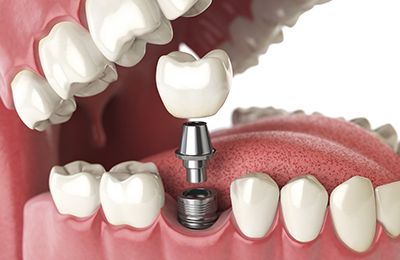
A single tooth implant offers the strongest stable foundation available in dentistry. Dental implant consists of three components: a titanium post placed surgically into the jawbone, an abutment, and a crown. The titanium post acts as an artificial root and provides a sturdy foundation for the new tooth that sits on top.
The implant surgery procedure is performed under local anesthesia, and most patients describe mild pressure rather than pain. Once integrated, the implant preserves bone, leaves neighboring teeth untouched, and lasts 15 to 20+ years with proper care.
A 2019 systematic review and meta-analysis of 18 prospective studies found a 10-year dental implant survival rate of 93 to 96%.
Howe, Keys, Richards – J Dent, 2019
Trade-offs of a dental implant: Surgical placement, treatment takes 3 to 6 months for full integration.
Traditional Dental Bridge: Non-Surgical Fixed Option
A traditional dental bridge replaces one missing tooth by placing crowns on the two neighboring teeth and suspending an artificial tooth between them. The procedure avoids surgery and usually finishes within two to three weeks.
Bridge preparation removes 63 to 72% of coronal tooth structure on each abutment tooth.
Edelhoff & Sorensen – J Prosthet Dent, 2002
Best for: You are a good candidate for a traditional dental bridge if your adjacent teeth already need crowns, or if you cannot undergo a implant surgery.
Trade-offs of a traditional dental bridge: The procedure requires grinding of the adjacent teeth, and the bone beneath the artificial tooth continues to shrink over time.
Flipper for Temporary Gap Coverage
A flipper is a lightweight, removable acrylic plate that rests on the gums and fills a small gap. Flippers lack the stability and chewing power of fixed options. They provide an inexpensive placeholder while a permanent dental implant heals.
Replacing Multiple Missing Teeth in NYC
To restore chewing function, improve appearance, and help prevent bone shrinkage, 209 NYC Dental offers several ways to replace multiple missing teeth in our Midtown Manhattan office. The best option depends on the number of teeth missing, their location, and whether the gaps are continuous or scattered.
| Treatment | Anchor Method | Impact on Adjacent Teeth | Bone Preservation | Bite Force | 10-Year Survival | Surgery? |
|---|---|---|---|---|---|---|
| Multiple individual implants | Individual titanium implants placed into the jawbone | Zero impact | Yes. Implants stimulate the jawbone. | 150-200 psi (~90% of natural) | 94-97% | Yes |
| Implant-supported bridge | Two or more implants support a suspended bridge | Zero impact | Yes, at implant sites | 150-200 psi (~90% of natural) | 94-97% | Yes |
| Traditional fixed bridge | Abutment crowns over natural neighboring teeth | Permanent reshaping of anchor teeth | No. Bone beneath the bridge continues to shrink. | Strong, but transfers load to anchors | ~89% | No |
| Removable partial denture | Acrylic or metal frame clasps onto natural teeth | Stress on anchor teeth and plaque trapping | No. Bone shrinks at every missing site. | Variable, often below 100 psi | 5-8 years lifespan | No |
How to Replace Several Missing Teeth in a Row?
When multiple teeth are missing in a row, dentists typically recommend either an implant-supported bridge or a traditional fixed bridge to rebuild the continuous gap. The best restorative option depends entirely on your jawbone support, long-term durability goals, treatment timeline, and whether you want to avoid surgery. You have two primary clinical choices:
The Importance of Oral Hygiene for Dental Bridges
Regardless of whether you choose an implant-supported bridge or a traditional bridge, committing to thorough oral hygiene remains critical. Both bridge types create a physical space under the artificial teeth where food particles and plaque easily accumulate. Without diligent daily cleaning using specialized tools like floss threaders or water flossers, you face three primary clinical risks:
- Gum inflammation develops rapidly around the bridge abutments when plaque is not removed.
- Bone loss deteriorates the foundation around your natural teeth, while peri-implantitis threatens the stability of your titanium implants.
- Recurrent decay frequently destroys the supporting natural teeth used to anchor a traditional fixed bridge.
A 15-year prospective study found progressive pocket depth increases around crowned abutment teeth, while control teeth remained stable.
Valderhaug et al. – Community Dent Oral Epidemiol, 1993
How to Replace Scattered Missing Teeth?
When teeth are missing in different areas of your mouth, dentists focus on restoring independent function to each gap. You have three primary restorative options to replace scattered missing teeth:

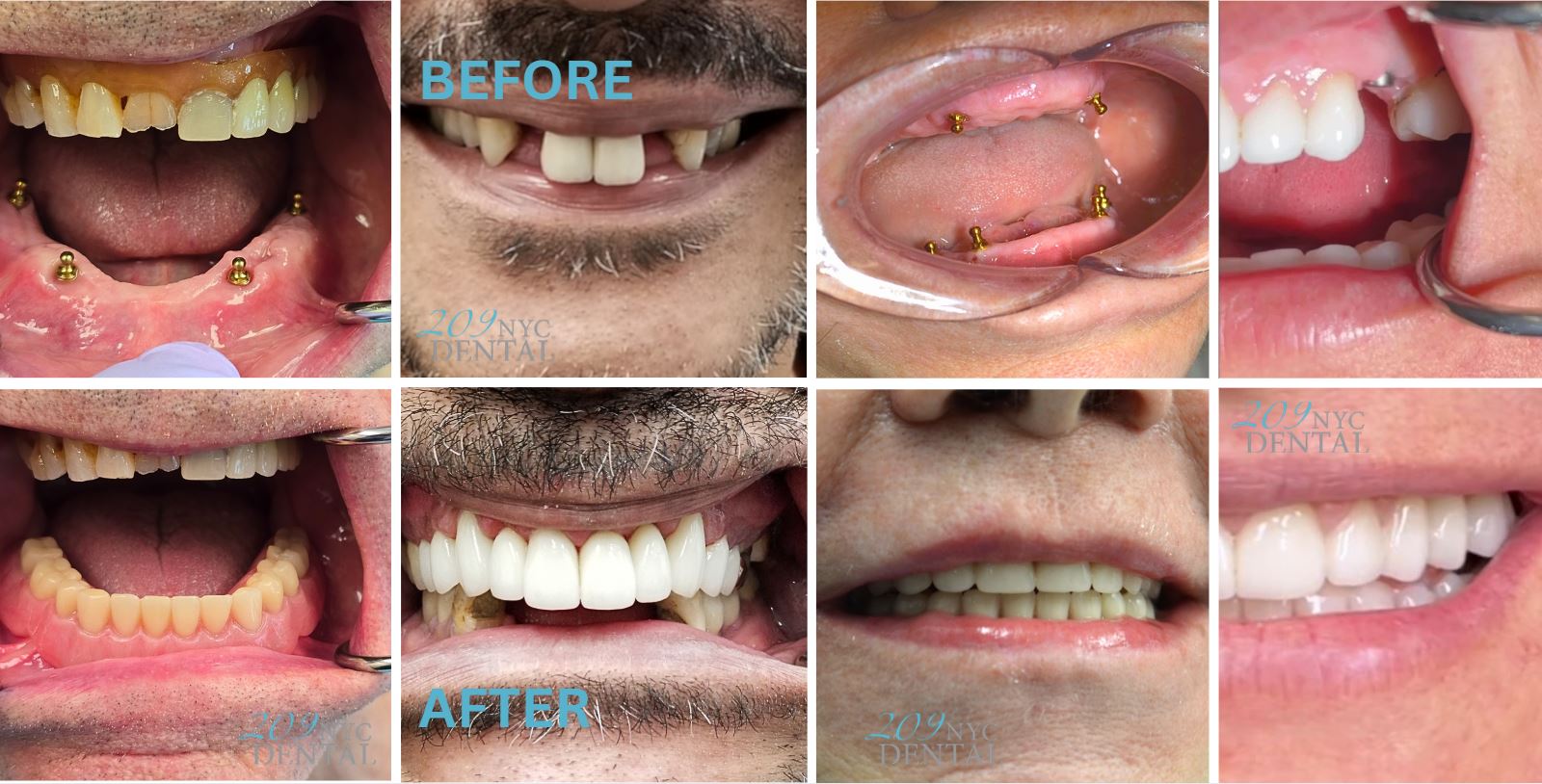
BEFORE

AFTER
You must carefully evaluate long-term bone health when choosing your restorative treatment. Partial dentures do not stimulate the jawbone, which may cause your chewing efficiency to drop over time as the clasps apply lateral stress to your anchor teeth. Many patients eventually transition to an implant-retained design to achieve permanent stability.
Patient satisfaction with conventional partial dentures as a long-term solution ranges from 50 to 81 percent across studies, with outcomes depending heavily on the appliance’s design and fit.
Awawdeh M, Alotaibi M B, Alharbi A H, et al. – Cureus, 2024
Full Arch Replacement Options
When patients have lost all teeth in lower or upper jaw, or face removing all remaining teeth, dentists restore function with one of three approaches: a fixed implant-supported bridge, a permanent denture, called All-on-X, a snap-in implant denture, or a traditional removable complete denture.
| Feature | All-on-X / Fixed Implant Bridge | Snap-In Implant Overdenture | Traditional Complete Denture |
|---|---|---|---|
| Anchor method | 4-8 implants supporting a fixed bridge | 2-4 implants with snap attachments | Acrylic base on the gums |
| Removable by patient? | No | Yes. Daily for cleaning. | Yes. Daily for cleaning. |
| Bone preservation | Yes, across the arch | Partial. Only at implant sites. | No. Ridge resorbs continuously especially noticeable in lower jaw |
| Bite force restored | 150-200 psi (~90% of natural) | Higher than conventional dentures, below all-on-x. | Below 100 psi. Drops further as bone shrinks. |
| Manhattan cost per arch | $25,000-$35,000 | $10,000-$15,000 | $1,500-$5,000 |
| Recovery | 3-6 months | 3-6 months | Not applicable |
| Primary risk | Peri-implantitis and mechanical failures | Peri-implantitis and clip wear | Progressive bone loss, slipping, dietary limits |

All-on-X Full Mouth Implants
Four to eight implants distribute chewing forces across the jaw, support a full set of replacement teeth, restore roughly 90% of natural bite force, and prevent the bone loss that follows full-arch tooth loss. The prosthesis stays in the mouth full-time and delivers a functional smile that does not slip or shift.
The Realities of All-on-X Treatment
Full-arch tooth replacement with All-on-X dental implants is a sophisticated clinical tool that serves as a final resort for restorative dentistry. While highly effective for the right candidate, this procedure is often over-marketed and over-prescribed as a simple cosmetic upgrade. Successful long-term outcomes depend entirely on deep patient education and a lifetime commitment to rigorous compliance.
When evaluating this treatment, you must consider the professional realities that dental experts emphasize:
- Clinical application and over-prescription issues arise when aggressive marketing promises overshadow the reality of this major surgical intervention.
- Long-term hygiene maintenance represents the most significant hurdle for patients because fixed bridges create “food traps” that require professional-grade daily care to prevent infection.
- Restorative intent and clinical utility are valued by dentists who view the procedure as a powerful solution for severe cases rather than a universal fix for a history of dental neglect.
- Sensory and tactile feedback is reduced because titanium implants lack the natural periodontal nerves that provide pressure and temperature awareness during chewing.
- Phonetic and speech transitions occur during the initial adaptation phase as your tongue navigates the necessary structural volume of the bridge.
At 209 NYC Dental, we believe in honest clinical guidance over commercial trends. All-on-X is a life-changing tool for the highly compliant patient who understands the literal and figurative costs of permanent full-arch restoration.
Snap-In Implant Overdenture
Two to four implants hold overdenture firmly in place and eliminate the slipping associated with conventional dentures. Patients remove the overdenture daily for cleaning. Implants preserve bone only at their placement sites. The rest of the ridge continues to shrink.
Traditional Full Denture
A traditional full or complete denture is the most accessible full-arch option. It is the least expensive option and requires no surgery. The trade-offs accumulate: without bone stimulation the underlying ridge shrinks, fit deteriorates and chewing power drops as bone loss progress.
This study established a standardized measure for chewing efficiency to objectively evaluate how different restorations perform against the biological standard of natural teeth by analyzing food particle size before swallowing.
Methods Compared:
- Natural Dentition: The benchmark for 100% “normal” chewing efficiency.
- Implant-Retained Overdentures (Snap-ins): Removable dentures supported by 2–4 implants.
- Shortened Dental Arches: Patients missing back molars but retaining front and premolar teeth.
- Traditional Complete Dentures: Fully removable, tissue-supported appliances with no implant support.
Key Findings:
Research demonstrated that implant-retained overdentures were the only removable prosthetic group that successfully moved patients from “impaired” to “sufficient” function, performing significantly better than traditional dentures.Fontijn-Tekamp FA, Slagter AP, Van Der Bilt A, et al. – J Dent Res. 2000
Tooth Replacement by Missing Teeth Location
The location of a missing tooth dictates how you look, how you eat, and how the rest of your mouth ages. Front teeth are the social teeth. Back teeth are the workhorses that support your bite and facial structure.
What Are the Options for Replacing Missing Front Teeth?
When a tooth in the smile zone is lost, aesthetics and biting ability are the primary concerns, complicated by the naturally thin bone in the front jaw. A dental implant with a Zirconia crown is often preferred for front teeth because it replaces the root, preserves the thin bone and gum tissue, and maintains a natural appearance due to the crown’s enamel-like translucency. Alternatively, a dental bridge can offer a natural look but requires reshaping neighboring teeth, which is generally avoided if those teeth are healthy. A flipper tooth is typically used only as a temporary cosmetic placeholder during implant healing.
What Are the Options for Replacing Back Teeth and Molars?
Your back teeth grind food and maintain the vertical dimension of your face, handling the highest pressure in the human body. If back teeth are not replaced, opposing teeth may super-erupt, shift down or up out of the socket, and adjacent teeth can tilt, causing bite collapse, TMJ pain, and a sunken facial appearance. Missing molars significantly reduce chewing efficiency, dropping bite force from a natural 200 to 250 psi to as low as 5.6 psi with removable partial dentures in severe cases.
Dental implants provide a stable foundation for back molars, restoring about 90% of natural chewing power (150 to 200 psi), which supports a healthy diet and prevents nutritional deficiencies.
While dental bridges can replace a single molar without surgery, they require crowns on adjacent teeth and are harder to keep clean, increasing the risk of decay.
What Are the Best Teeth Replacement Options for Seniors?
Our philosophy with older adults is simple: age alone is not a disease, and you are rarely too old to improve your quality of life. Many seniors assume they must settle for removable dentures, or that their bodies can no longer handle modern dental procedures. Neither is true.
The real deciding factors are bone density, medications that affect healing (such as bisphosphonates or blood thinners), and overall health history. Dr. Jin Wang reviews your full health history and digital imaging at your dental implant consultation to determine whether implants, a bridge, or a denture is the safest and most effective path.

BEFORE

AFTER
Managing Bone Loss in Long-Term Denture Wearers
Even if significant bone loss has occurred over years of denture wear, advanced grafting techniques and angled implant placements can safely bypass areas of thin bone and restore an entire arch for many patients as long as there are no other contraindications.
Insurance and Payment at 209 NYC Dental
PPO Insurance
209 NYC Dental accepts most PPO and POS dental plans. We handle all insurance verification and submissions. Bridges and implant restorations are typically classified as major restorative, with coverage around 50% after your deductible. Annual maximums for New York PPO plans commonly cap between $1,000 and $2,500.
Split Across Benefit Years
If your plan has an annual maximum, scheduling implant-based restorations procedures across two calendar years effectively doubles your available coverage. We can help you plan treatment timing around your benefit period.
FSA and HSA Eligible
FSA and HSA funds can be applied toward any replacement option. If you are approaching year-end, timing treatment around your benefit period is worth considering.
CareCredit Financing
209 NYC Dental offers CareCredit financing, including 0% interest plans for qualifying patients. Standard CareCredit rates apply if the promotional period is not used correctly.
Why Choose 209 NYC Dental for Teeth Replacement
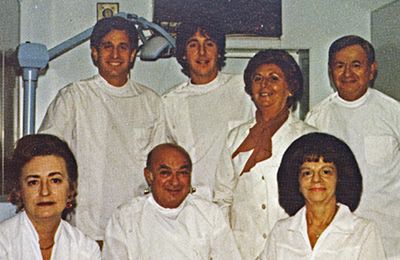
209 NYC Dental has operated continuously since 1887, making it the oldest dental practice in New York State and a leader in implant dentistry in New York, NY. Today, the Midtown East office at 209 E 56th Street houses a multispecialty team that handles every stage of tooth replacement in-house.

Board-Certified Periodontist on staff
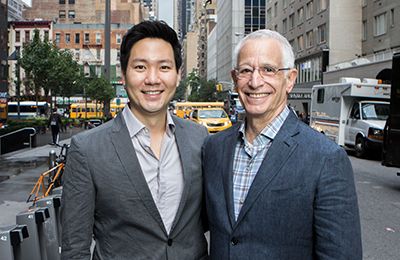
Dr. Jin Wang, DDS, Diplomate of the American Board of Periodontology, performs implant placement, bone grafting, and tooth extractions. Dr. Huyn Woo, a board-eligible periodontist, provides additional surgical coverage.

In-house dental lab
A master technician fabricates dentures, partials, and flippers on-site for faster turnaround and precision fit.

Extraction-to-restoration under one roof
Your surgeon and restorative specialist coordinate your care without outside referrals.

Open 7 days a week
Walk-in emergency and routine dental care appointments are available every day, including weekends, with no surcharges.
Frequently Asked Questions About Replacing Missing Teeth
What are Tooth Replacement Options for Smokers
Non-implant alternatives and in some cases implants
Smoking does not automatically disqualify you from a dental implant procedure, but it does raise the stakes.
Implants in smokers carry a 140% higher risk of failure compared with non-smokers. Patients smoking more than 10 cigarettes per day showed the most elevated failure rates and marginal bone loss.
Mustapha AD, Salame Z, Chrcanovic BR. – Medicina, 2021
Dr. Jin Wang works with patients who smoke or vape by recommending a cessation window before and after implant placement to improve healing. If quitting is not possible, a fixed bridge or removable denture are reasonable non-implant alternatives.
Is a dental bridge cheaper than a dental implant?
Not when compared correctly
Bridges are billed per unit, not per missing tooth. A three-unit bridge replacing one missing tooth (two crowns plus one pontic) totals approximately $3,500 to $6,500 in Manhattan. That is the same range as a single dental implant, all-in. Patients who compare a per-unit bridge price to an all-in implant price are comparing different things. Always ask for a total treatment cost before drawing conclusions.
Are dental implants painful to place?
No. Most patients describe pressure, not pain.
Dental implant placement is performed under local anesthesia. Most patients describe the procedure as more comfortable than they expected, reporting mild pressure rather than pain. The local anesthetic numbs the surgical site completely. Over-the-counter pain relief is usually sufficient afterward, and most patients return to normal activities the next day.
What is the cheapest option for replacing missing teeth?
Removable dentures
A removable partial or complete denture is the most affordable solution for tooth replacement, ranging from $1,500 to $5,000 in Manhattan depending on type. Removable dentures do not require surgery and can be delivered within one to a few weeks. The trade-offs accumulate over time. Bone shrinks at every missing tooth site, fit deteriorates, and chewing power drops well below natural levels. Patients planning long-term function often invest in implant-based options instead.
Which teeth replacement option is best for seniors?
Implants, when systemic health allows
Age alone does not disqualify you form any replacement teeth options. A 2017 systematic review reported 91.2% 10-year implant survival in patients aged 65 to 90+. Controlled diabetes, smoking history, and bone density carry more weight than chronological age. A senior is typically a good candidate for implants if their overall medical history supports surgical healing. Seniors who replace teeth restore chewing power and protect their nutritional intake.
Does dental insurance cover tooth replacement in New York?
Partially, and varies by plan
Most PPO dental plans cover bridges, removable dentures, and implant restorations as major restorative procedures. Coverage typically runs around 50% after the deductible, capped at an annual maximum of $1,000 to $2,500. Implant coverage varies more than bridge coverage. The crown is frequently covered while surgical placement may not be. 209 NYC dental verifies your benefits before treatment begins.
How do I care for a dental implant after placement?
Regular brushing, flossing, and maintenance visits
Dental implants require the same daily care as natural teeth. Regular brushing twice a day, flossing around the implant crown, and consistent professional cleanings keep peri-implant tissue healthy. Patients return for maintenance visits every 6 months so we can monitor the gums and bone around the implant. With proper care, implant posts withstand normal wear for 15 to 20+ years while restorations can last any where between 5 and 15 years.
Schedule Your Initial Consultation in Midtown, New York
Every tooth replacement decision starts with evaluation of your medical history and oral health. Your gums and bone health, the health of neighboring teeth, and your long-term goals will help us determine your candidacy for each replacement option. There is no universal right answer. Schedule your consultation to get an expert advise on the best options for you!
Same-day appointments available most days.
209 NYC Dental209 E 56th Street, 1st Floor
Manhattan, NY 10022
Between 2nd and 3rd Avenue | Midtown East
Subway: 4, 5, 6, N, R, W to 3rd Ave 59th St (3 blocks) | E, F to 3rd Ave-53rd (3 blocks)
Nearby: Bloomberg office on 3rd Ave, Bloomingdales, MoMA