 Our History
 Our Providers
 About Us
 Blog
Blog
 Contact us
 Diagnostic & Preventive
 Dental Implants
 Clear Braces - Invisalign
 Cosmetic Dentistry
 Periodontics
 Patient Forms
 Payment Information
 Insurance Options
 CareCredit Dental
 Appointment Policy
 Free Consultation
 Complimentary Teeth Whitening
 Teeth Whitening
Gingivectomy vs. Crown Lengthening


If you are confused about the difference between a gingivectomy and crown lengthening, you are not alone. These are two different procedures. They treat different problems. Yet, online articles often lump them together as “gum contouring” or “gummy smile treatments.” This makes patients confused.
Crown Lengthening vs Gingivectomy Comparison: The Key Differences
| Feature | Gingivectomy | Esthetic Crown Lengthening | Functional Crown Lengthening |
|---|---|---|---|
| What is removed? | Gum tissue only | Gum tissue + Bone | Gum tissue + Bone |
| Healing Time | ~1 Week | 3–6 Months | 3–6 Months |
| Best For | Gum disease, overgrown gums | Gummy smile, uneven gums | Broken teeth, insufficient tooth structure |
| Purpose | Remove diseased or excess tissue | Cosmetic smile improvement | Enable crown placement on broken tooth |
The real question isn’t “which is better?” It is “which one do you actually need?”
Expert Care at 209 NYC Dental
Stop guessing about your gum health. At 209 NYC Dental, our board-certified NYC periodontists (Dr. Jin Wang and Dr. Michael Villa) clear up the confusion. Whether you have a damaged tooth or excess gum tissue makes your smile look uneven, we will tell you exactly which dental procedure you need.
State-of-the-Art Technology
Patient-Centered Care
Located: Midtown Manhattan (Across from Bloomberg Building)
Trusted: Providing excellence in care since 1887
Reviews: 1,600+ 5-star reviews
Key Takeaways: What You Need to Know
- Different Goals: Gingivectomy removes excess gum tissue (soft tissue only), while Crown Lengthening removes gum and bone to fix structural issues.
- Healing Time: Gingivectomy heals quickly (~1 week), whereas Crown Lengthening takes 3-6 months for full bone healing.
- Treatment Match: Use Gingivectomy for gum disease/overgrowth; use Crown Lengthening for broken teeth or gummy smiles involving bone.
- Expert Diagnosis: Accurate diagnosis of bone levels is crucial to prevent “tissue rebound” (gums growing back).
Looking for a quick answer? Jump to Your Concern or Procedure:
Match Your Symptoms to the Right Procedure
Click on the symptoms that best describe your experience. We’ll show you which procedure best address your specific concern.
“I want to change how my smile looks”
- Teeth look short or uneven
- Too much gum shows when you smile
- Gum line is asymmetrical
Uneven | Gummy Smile Correction
“My gums look thick and bulky”
- Gums growing over teeth
- Thick, lumpy tissue
- Hard to brush properly
Overgrown Gums Correction
“My gums look red and swollen”
- Red, puffy gum tissue
- Bleeding when brushing
- Deep pockets forming
Inflamed Gums Treatment
“I need to fix a damaged tooth”
- Tooth broken below gum line
- Deep decay near roots
- Need a crown but not enough tooth
Broken Tooth Treatment
The Gum Procedure Puzzle: Making Sense of the Confusion
When comparing gingivectomy vs crown lengthening, you might feel unsure. These terms are used in confusing ways. This makes it hard to know what is right for your oral health.
Why Do Dentists Use Catch-all Terms?
When patients look for treatments, they usually describe what they see (like a “gummy smile”) rather than the clinical procedure they need. To meet you in the middle, dentists often use the simple terms you are already searching for. You might see:
- Gum contouring
- Gum lift
- Gummy smile treatment
- Cosmetic gum surgery
These are general terms dentists use to describe any procedure that reshapes the gum line. They can mean a gingivectomy, gingivoplasty, crown lengthening procedure or a mixture of two.
What is the Real Difference? These procedures address different concerns. The amount of time for recovery is different. The amount of gum tissue removed is different too.
What Your Dentist Means
“You need gum contouring” or “gum lift” = Ask: Which specific procedure they mean? Gingivectomy, gingivoplasty, or esthetic crown lengthening?
Gingivectomy vs. Crown Lengthening:
Which Procedure Do You Actually Need?
The treatment is always defined by your symptoms, complaints and your physical condition, in this case condition of your teeth, gums and/or underlying bone.

Path A: Uneven | Gummy Smile
“I want to change how my smile looks.”
You likely have:
A gummy smile or uneven gums. Excess gum tissue makes teeth look short.

The Goal:
You want a balanced smile. You want to increase the visible portion of your tooth.
The Likely Procedure:
This is often Esthetic Crown Lengthening. Sometimes, if the bone is fine, a simple gingivectomy procedure may work.

Path B: Overgrown Gums
“My gums look thick, lumpy, or are growing over my teeth.”
You likely have:
Thick, fibrous gums covering your teeth (known as Gum Overgrowth or Gingival Hyperplasia). This is often caused by genetics or medications. It also makes brushing difficult.
The Goal:
To remove the excess bulk of tissue. This restores the natural shape of the gums, stops food from getting stuck, and uncovers your teeth.
The Likely Procedure:
This is a Gingivectomy. It trims away the overgrowth of soft tissue to improve your oral health and appearance.

Path C: Inflamed Gums
“My gums look red, swollen, or puffy instead of firm and pink.”
You likely have:
Red, swollen gums due to periodontal disease. You likely have deep pockets between the teeth and gums where plaque accumulates.
The Goal:
To remove the diseased gum tissue. This eliminates the pockets so you can maintain proper oral hygiene.
The Likely Procedure:
A gingivectomy will not treat gum disease by itself but may be necessary as part of a comprehensive periodontal treatment plan that may include scaling and root planing and /or periodontal surgery. Gingivectomy removes the diseased tissue to help the gums heal tight against the tooth.

Path D: Broken Tooth
“I need to fix a broken or decayed tooth.”
You likely have:
Deep decay or a tooth breaks or cracks in the area covered by gums.

The Goal:
Your dentist needs to create enough space above gums to fit a dental crown securely.
The Likely Procedure:
This is Functional Crown Lengthening to expose enough underlying tooth.
Understanding Gum Procedure Terminology
Before we explain what you may need, let’s look at the words you see online.
Gum Contouring / Gum Lift
These are general terms dentists use to describe any procedure that reshapes the gum line.
Gingivectomy procedure
This is a surgical procedure to remove gum tissue only. No bone is removed. It is used to remove excess gum tissue.
Functional Crown Lengthening
Surgical procedure to remove gum tissue AND reshape the bone underneath (or underlying bone structure). This is done to expose enough visible tooth structure. It is used when a tooth is broken below the gum line and more tooth structure is needed to anchor a dental crown.
Esthetic Crown Lengthening Procedure
(Described by the ADA as Anatomical Crown Exposure) Treatment to remove gum and reshape the underlying bone to improve the aesthetics of a smile. It helps show more of the tooth surface and prevents the gums from growing back (tissue rebound).
Crown Lengthening Procedure Details
The Short Definition: A procedure that removes gum tissue around tooth AND reshapes the bone underneath.
Why Bone Matters
Your mouth needs a safety zone between the bone and a dental restoration. If a crown is too close to the bone, your body fights it. You might get pain or tissue rebound (gums growing back). Crown lengthening surgery creates this space.
Key Clinical Terms
Clinical Crown vs. Anatomical Crown
The Clinical Crown is what you see smiling. The Anatomical Crown extends deeper, to where the enamel meets the root.
Biologic Width
The natural space needed between a dental restoration (like a crown) and the underlying bone. Maintaining this space is key to oral health.
Insufficient Ferrule
When there is not enough solid tooth structure sticking out of the gums to hold a crown securely.
Tissue Rebound
When gum tissue grows back after it was cut. This happens if the underlying bone was not contoured correctly.
Recovery
Because this dental procedure involves bone, it takes longer to heal.
- Sutures: You have stitches for 1–2 weeks.
- Bone Healing: It takes 3–6 months for complete healing of the bone. This is needed before the final crown.
Cost in Manhattan
This is a complex surgery. Expect $1,000 to $4,000 per tooth.
Functional vs Esthetic Crown Lengthening
Restorative
Functional Crown Lengthening
Needed when a tooth breaks deep down or has insufficient structure to support a dental crown.
- The Goal: To expose more tooth structure so a new restoration (crown) doesn’t fall off.
- The Process: The doctor lowers the bone level to make clinical crown larger to save the damaged tooth.
- Clinical Crown: The part of the tooth that is currently visible above the gum line.
Cosmetic
Esthetic Crown Lengthening
Also described by the ADA as Anatomical Crown Exposure. Designed for patients with a “gummy smile” where teeth look short.
- The Goal: To show the full tooth surface for a more confident, balanced smile.
- Why not just trim the gums? If you only trim gums without shaping the bone, the tissue is likely to rebound (grow back).
- Anatomical Crown: The part of the tooth covered in enamel, extending only to the gum line, where the root begins.
Gingivectomy Procedure Details
The Short Definition: A surgery that removes gum tissue only. No bone is touched. It is used to remove excess gum tissue.
When Is It Used?
A gingivectomy procedure is common for treating gum disease. Poor oral hygiene can cause pockets to form between gums and teeth. These pockets trap bacteria.
- Plaque Accumulation: A buildup of sticky film with bacteria. Poor oral hygiene causes this. It leads to gum disease and requires removal of the infected tissue.
A specialist uses this procedure to remove infected gum tissue or diseased tissue (also called diseased gum tissue). This reduces the depth of the pockets. This makes proper oral hygiene easier. It leads to better oral hygiene overall.
It is also used if excess tissue covers your enamel. This works only if the bone underneath is at the right level.
Related Procedure: Gingivoplasty
Gingivoplasty is a dental procedure to reshape the gums to make them look nice. While gingivectomy removes the tissue, gingivoplasty sculpts the remaining tissue. It is often required in addition to gingivectomy.
Helpful Info
“>“You have pocket depths of 5-6mm” = You have gum disease with deep gaps trapping bacteria
“The gingival margin is uneven” = You have uneven gum lines
Procedure Details
Anesthesia
You get local anesthesia. You won’t feel pain.
The Process
Dr. Wang prefers using a scalpel. This gives better control when removing gum tissue. It helps with proper healing.
Time
It is fast. It often takes less than an hour.
Recovery
This surgery only affects soft tissue. The healing process is quick.
- Initial Healing: 1 week.
- Full Healing: The remaining gums look normal in a few weeks. Patients experience minimal discomfort.
Cost in Manhattan
At a specialist office in NYC, this costs $500 to $1,500 per area.
Real Patient Scenarios
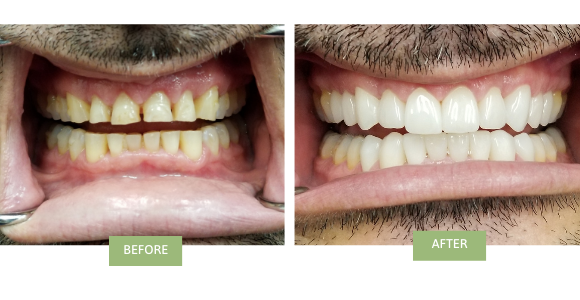
Case 1: The Total Smile Makeover
This patient had healthy but short worn out teeth.
- The Diagnosis: He had excessive tooth wear due severe bruxism.
- The Solution: Dr. Wang completed Esthetic Crown Lengthening. This fixed the bone and gum levels. Dr. Ifraimov, our restorative dentist, corrected tooth wear with beautiful porcelain veneers.
- The Result: A wider balanced smile with the right crown length.
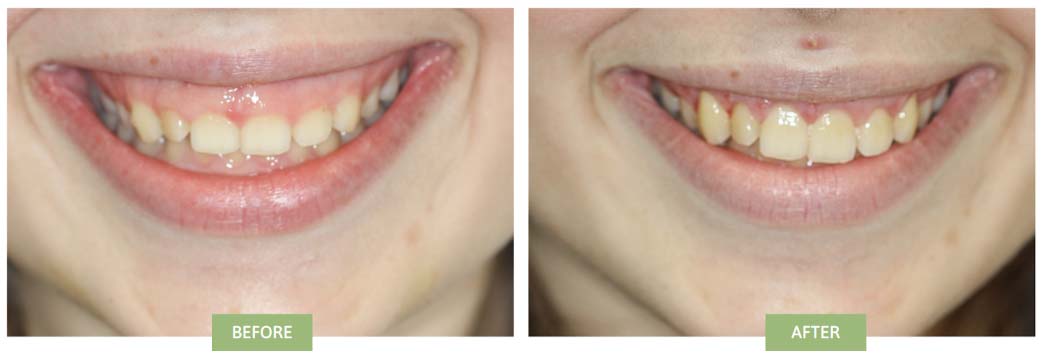
Case 2: The Gummy Smile Correction
This patient showed too much gum.
- The Diagnosis: Her bone was fine. She just had excess tissue.
- The Solution: Dr. Wang performed a precise Gingivectomy to remove excess gum tissue.
- The Result: Her teeth looked longer right away.
What to Expect at 209 NYC Dental
Choosing the right doctor matters. Complex periodontal procedures need a specialist. Think of a periodontist as an oral surgeon for your gums.
Periodontal Expertise
At 209 NYC Dental, we are experts in periodontal health.
- Dr. Jin Wang (Board Certified Periodontist)
He understands what is the best crown length and which treatment each patient needs to achieve the desired look. Dr. Wang uses a scalpel for precise control. This ensures proper healing and helps the treated teeth look great.
The Smile Team
Our specialist work together. If you need restorative treatment like veneers, our cosmetic specialist (Dr. Ifraimov) works with Dr. Wang. This ensures your gum line is perfect.
FAQ about Gingivectomy & Crown Lengthening
Can I choose between them?
Usually, no. Your anatomy decides. If you have a fracture below the bone, you need surgical crown lengthening. A gingivectomy won’t work.
Does insurance cover gingivectomy?
Yes: If it is to remove infected gum tissue and periodontal pockets.
No: If it is just to fix a gummy smile.
Does insurance cover crown lengthening?
Yes: If it is a functional crown lengthening procedure to save a tooth.
No: If it is for looks (esthetic).
Will my general dentist do this?
Some do simple trims. But crown lengthening surgery touches bone. It is best done by a specialist (periodontist) to protect the treated teeth.
Get the Right Diagnosis First
There are big differences between these procedures. One is a quick trim. The other changes the bone to save a tooth.
Don’t guess with your oral health. If you have a broken tooth or want to fix a gummy smile, you need to know about the bone underneath.
Schedule a consultation with our periodontist today.
209 NYC Dental
209 E 56th Street, 1st Floor
Manhattan, NY 10022
Between 2nd & 3rd Avenue | Midtown East